Author: VetsDigital

Rabbit Enrichment

During these colder months of winter and early spring it is more important than ever to consider whether your pet rabbit is suffering from stress of inactivity and boredom.  Don’t worry if you think your pet may have had a dull few months of winter; in this article we have discussed some simple ways of adding enrichment activities to your pets day to day life, helping to ensure they are as happy as they can be.

Enrichment encourages rabbits to display natural and instinctive behaviours, such as foraging, digging, jumping, hiding and socialising. This keeps them mentally stimulated and avoids boredom and destructive behaviours. According to The Rabbit Welfare and Association Fund, rabbits in the wild will spend about 80% of their time foraging for food. We can simulate and encourage behaviour in our own pet rabbits. 

Here are some tried and tested examples to encourage foraging behaviours:

  • Hay racks – this allows for the hay to be elevated, preventing it from becoming soiled. You can buy hay racks or mangers from most pet shops, but you can also fashion your own, be it a hanging basket, a plastic carrier bag holder, a willow basket, stuffing hay in toilet roll tubes, cardboard boxes or paper bags. 
  • Growing grass in a tray or plant pot.
  • Bin the bowl – sprinkle your rabbit’s pellets around their enclosure, in some hay, or in a tunnel. While discussing food, we also advise against muesli based diets.  Research has shown most rabbits tend to selectively feed on muesli based diets. Eating only the tastiest parts results in an unbalanced diet leading to obesity and dental disease. Instead opt for pellets, making sure these only amount to 5% of the total diet. 
  • Mixed herbs – sprinkle fresh or dried herbs in with their hay and around their enclosure.
  • DIY cardboard bunny mat – cut out the bottom of a cardboard box and fill with strips from the cardboard box, corrugated card is best, hide treats and pellets in amongst the layers. 
  • Interactive feeders – you can buy these from pet shops or online, these enable foraging behaviours, but also provide mental stimulation. You can simulate an interactive feeder at home using an old muffin tin tray. 
  • Providing natural forage you could collect whilst out on a walk or snipping’s from trees such as apple and pear. Please note, avoid plants that are toxic to rabbits or that may have been contaminated with insecticide. Have a look on The Rabbit Welfare Association Fund’s website for an in depth list on vegetables, fruits, herbs and plants which are safe to eat. 

Running and jumping:

No longer is it commonplace for a rabbit to be kept in a small 4ft, one tiered hutch.  These days owners are becoming more aware about the space we should be providing to our rabbits. Furthermore, indoor rabbits are on the increase. The minimum hutch requirements are 6ft x2ft x 2ft, with an 8ft run.  The hutch should allow for your rabbit to stand on their hind legs without touching the ceiling, stretch out fully and allow them to make at least 3 hops. We want to allow for our rabbits to tear around in circles, binky, jump on boxes and hideaways.  As mentioned these really are only minimum requirements, when researching rabbit enclosures online, there are some amazing examples out there to provide some inspiration.

Digging:

This natural behaviour can be encouraged by providing your rabbit with a digging pit, be it a litter tray filled with soil, a sand pit or a large shallow plastic box. 

Hiding:

Rabbits are a prey species and in the wild, have access to a burrow for privacy and hiding away so that they feel safe and secure. Tunnels and boxes will encourage your rabbit to be more active, but also provide a substitute burrow. Tunnels can be brought from most pet shops, whether plastic or cardboard, or consider purchasing thick plastic drainage piping. Boxes and hideaways come in many varieties, but a homemade hideaway using a cardboard box is just as effective. Due to being a prey species, preferably there should be an entrance and exit. Furthermore, platforms and lookout posts should also be provided. 

Socialising:

Rabbits love company and are very sociable animals. Companionship is an important component; it alleviates boredom and provides enrichment. Those in bonded pairs are known to exhibit less stressed and destructive behaviours. According to The Rabbit Welfare Association studies have shown rabbits value the company of other rabbits as much as they value food. Paired rabbits should be neutered, and preferably mixed sex pairs, although same sex bonded siblings should be fine together. Should you require advice on rabbit bonding then please give us a call at the practice.

Heart Health Success for Kiyoshi and Rhino

Throughout February and March, we are running our heart focus months and we’d like to share two success stories with you.

Rhino visited us recently as his owner was worried about his breathing and general lethargy. Rhino is a vivacious Chihuahua Cross who we’re used to seeing full of life and feistiness, so it was immediately concerning for Keith to find him with no energy and having to concentrate on every breath. Keith identified a loud heart murmur when listening to Rhino’s chest so booked him in for an ultrasound scan of his heart, a procedure also known as echocardiography. Echocardiography is performed with the patient lying on their side on a comfortable padded table in a darkened room using gentle and reassuring restraint by our lovely nursing team. The heart scan is ideally done conscious so in Rhino’s case, we didn’t need to worry about posing any anaesthetic risk to him.

Rhino’s ultrasound revealed the source of his murmur to be a leaky valve between two of his heart chambers. The valve involved is known as the ‘mitral valve’ and it should allow forward flow of blood through the heart. It isn’t uncommon in small dogs like Rhino for this valve to become insufficient and allow some backwards leakage of blood through the heart. This can sometimes be so mild that it never causes the heart a problem but, in some dogs, like Rhino, the heart eventually starts to struggle with the strain of this backwards flow and this can lead to heart failure. All the signs detected on Rhino’s heart scan were indicative that his heart wasn’t coping and that it needed help.

The team started Rhino on medication to help his heart pump more efficiently and we’re very pleased to report that, after only 2 weeks, we can see a huge improvement! His breathing is now easier, he’s enjoying his walks and his demeanour is much improved! Rhino will need close monitoring going forward and he will need long term medication but we’re hopeful he’ll enjoy a longer more comfortable life because of it.

Our second success story involves a beautiful cat named Kiyoshi who was in desperate need of some dental treatment. Kiyoshi has had quite a prominent heart murmur for some time which has understandably left his family anxious about ever putting him through an anaesthetic. Unfortunately, Kiyoshi’s mouth had become very painful recently, so we needed to act and do something. Thankfully we were able to do an echocardiogram which showed his heart was pumping perfectly well and not showing any signs of failure. After this reassuring discovery, we all felt more comfortable anaesthetising Kiyoshi for his dental treatment. Kiyoshi had a very smooth anaesthetic and recovery but unfortunately, he did require some extensive dental work and the extraction of nine teeth! However, after just 1-week Kiyoshi felt much more comfortable and his owners report he had regained his appetite and is back to his happy self. Interestingly cats often develop heart murmurs that are completely innocent and not an indication of a heart problem.  At the clinic, we’re usually much more worried if we feel the heart is beating too fast (known as tachycardia), has an irregular pattern (known as an arrhythmia) or has an extra beat (known as a gallop sound).

So what signs should you look out for if you have a patient with heart issues?

  • Breathlessness
  • Exercise intolerance and lethargy
  • Increased effort to breath
  • Collapse
  • Reduced appetite
  • Sometimes a cough can also develop

If you ever visit us and we introduce some concerns regarding your pet’s heart health there are plenty of options for further investigation. We are incredibly lucky to work closely with the amazing specialist team at Dick White Referrals and we also often have renowned cardiologist Paul Smith from East Anglia Cardiology visit us. If specialist care isn’t an option then don’t worry, Charlotte takes a great interest in imaging and cardiology so is always happy to help where she can!

If you would like to meet with one of our team to see how we can help your pet, the appointments are free through the month of March and can be booked online here or by calling the clinic on 01206851338.

Brexit Update

Most of our clients love to holiday in Europe and for many of them, that holiday wouldn’t be complete without their beloved pet beside them. If you’re one of these owners then we know, like us, you’ve been concerned about what the Brexit outcome will have on your future travel plans.

Now that Brexit has finally happened we’ve been informed by the Animal and Plant Health Agency (or APHA for short) that ‘pet owners can travel with their pets in the same way as they do now during the transition period, until 31 December 2020’. 

So what does that mean?  Well, it means we can continue to travel with our pets using the Pet Passport system until the end of the year.  If you’re not familiar with the Pet Passport system, it involves the following steps:

  1. Your pet must be microchipped, and this must be done before commencing step 2
  2. Your pet must be vaccinated against Rabies.  Pets must be at least 12 weeks old at time of vaccination
  3. After the rabies vaccination the passport can be completed however there is a 21 day wait after the date of the rabies vaccination before it becomes valid for use
  4. The passport can only be used to travel to certain listed EU countries
  5. 1-5 days before re-entry to the UK dogs must be treated for tapeworm by an official veterinarian and their passport completed (this is not necessary if travelling from Ireland, Finland, Norway or Malta)

Whilst this is great news, we would stress that the Pet Passport system is only really designed to stop the spread of rabies into the country.  It is not designed to protect your pet while traveling in Europe. To best protect them there are additional preventative measures that should always be taken. These additional steps are not only to protect your pet but also you and your family.

  • The Fox Tapeworm (also known as Echinococcus) is zoonotic which means it can be passed on to humans. In humans this worm can kill or significantly shorten life expectancy. All dogs must be treated for this tapeworm between one and five days of returning to the UK. However, it is very possible that your dog is re-exposed to this tapeworm after their treatment but before return to the UK. As a precaution, we recommend a second treatment after returning to the UK, within 30 days of the initial treatment, to get rid of any infection that was picked up within that five-day window. If you are travelling for a long time, we would recommend treating for tapeworm every 30 days whilst you are away and then within 30 days of returning to the UK.
  • Ticks can be picked up by your pet in Europe and these can transmit infectious disease, some of which can be fatal. With our current climate some of these ticks thankfully can’t survive outside in the UK, however they could quite happily live in your home and infect you or your pet. We strongly recommend using a good tick preventative whilst away and it is good practice to give your pet a daily tick check as no tick product is 100% effective
  • Leishmania is a disease which can affect both pets and humans.  It is transmitted by sandflies and is mostly seen in southern Europe. We recommend a good parasite preventative with sandfly repellent.  In addition it is advised to use avoidance techniques such as avoiding walks at dusk and dawn when they are most active. If you will be spending a large amount of time in endemic areas, then it may be worth considering having a vaccination against leishmania to prevent the clinical disease developing.
  • Heartworm is a disease affecting dogs and cats which is transmitted by mosquitoes. Although we have mosquitoes in the UK, our current climate has prevented heartworms from becoming established in the UK. Again, a good parasite preventative which will kill heartworm but also repel mosquitos is strongly advised.

If you have any concerns about travelling with your pet or their parasite preventative needs, then please don’t hesitate to get in touch. We still don’t know what will happen to the Pet Passport system beyond 31st December 2020, but we will be sure to inform you via our website, social media and a newsletter once we do.

4 barking dogs, 3 chocolates, 2 mince pies and a visit to the vets on Christmas day!

Christmas is an exciting period for everyone including our pets! Every year we bring lots of exciting new things into our homes, from gifts to decorations and of course, food.  All these new smells and fun things to play with are just as exciting for our pets!

However, while we all enjoy the Christmas period, it can also be quite a dangerous time for pets and unfortunately every year, we have a couple of Christmas casualties. Many of our clients are surprised when we tell them about the everyday hazards our pets can encounter at Christmas, so to ensure that your pet is kept safe over the holiday season, we have highlighted some of the most common below. 

Toxins  

Let’s start with the most common toxin that pets get exposed at Christmas time, chocolate!! 

Chocolate and cocoa powder contains theobromine and is highly toxic for both dogs and cats.  Although we rarely see cats eating chocolate, we can’t say the same for dogs!  Every year we have a number of canine visitors to the clinic, whose worried owners have spotted their furry friends ingesting chocolate. Depending on the amount and type of chocolate this can be fatal; the darker the chocolate, the more toxic! Symptoms of chocolate poisoning can be vomiting, twitching, tremors and fitting within a few hours; but later stages can cause organ failure. So make sure those chocolate boxes are out of reach before you leave the room!

Raisins, grapes, currants and sultanas are another common Christmas problem. These are everywhere at Christmas time!  Many Christmas recipes contain them and our pets seem to love them too but unfortunately, even one grape can cause devastating damage to our pets. There is no correlation between the amount ingested and the severity of the symptoms; this means that some dogs might not show any signs of intoxication, while others that ingested the same amount might develop vomiting, diarrhoea or kidney failure.  It is also common for a dog to ingest one of these in the past with no symptoms but the next time have a reaction, even with the smallest amount.

Another surprising source of food toxins are all forms of onion and garlic. These can be toxic for both dogs and cats in all their forms, meaning if they are cooked or mixed in other foods they still pose a risk to our pets. Onions and garlic can damage the red blood cells causing anaemia and, in severe cases this could also be fatal.

Finally, don’t forget the plants!  Mistletoe, Ivy and Lilies, are all commonly found at Christmas time and are all highly toxic to our pets, although some are more dangerous than others. While Mistletoe and Ivy can cause gastrointestinal symptoms such as diarrhoea and vomiting, Lilies can cause seizures and be fatal. Best to keep those up high and away from any easy accessible spots. 

Blockages    

These items represent a risk for our pets not because they are toxic (with the exception of a few) but because they can get stuck in their gastrointestinal system and cause a blockage that requires surgery to be removed. 

The perpetrators? Toys and Christmas decorations! Every year we fill our homes with beautiful decorations and often, new toys for children. We would always advise to just be mindful of the size and material the toys are made of, and where they could end up if found by some furry paws!

Wrapping paper, although this is not usually toxic for pets, the ingestion of large amounts can cause an obstruction in their stomachs. Surprisingly, ribbons can be one of the worst offenders; if swallowed they can cause extensive damage to the intestines and may result in large sections needing to be removed.

Silica gel sachets, these are commonly found in gifts and are designed to help keep out moisture.  While they do not represent any toxic risk for our pets if ingested, they are a common cause of blockages and therefore put your pets life at risk. 

Finally candles are another item that can be found in the house the whole year round but are particularly common at Christmas. They fill our homes with a lovely scent and flicker away on these cozy winter night, but those various fragrances can also be very appealing to our dogs and cats. Most commonly they also represent a choking hazard and could potentially obstruct their gastrointestinal system. 

What to do if my pet ingests any of the above…

Contact your vet immediately! We offer out of hours care provided by Vets Now, just to make sure you have a trustworthy vet to speak to if the worst should happen. If you are ever in doubt, please don’t hesitate to give us a call and one of our team can advise on whether action needs to be taken. Most of these hazards above can be treated successfully if your pet receives medical attention quickly. So if you catch your furry family members, tucking into something they shouldn’t, do not wait for the symptoms to appear, were on hand to help. 

New Year, New You…or New Pet at least….

None of us like to start talking about next year before Christmas has even happened, but let’s face it, 2020 will be with us soon enough! And if you’re anything like the team at Mayne Vets, you’re looking forward to overindulging at Christmas, and thinking about starting afresh in the New Year…

But does the same apply to your pet?  Have you been told your pet could do with losing a couple of kilos? Or do they tend to put on a bit of “winter weight”?

Unfortunately, a large portion of our pets are overweight, and obesity related diseases can significantly shorten the lifespan of our furry family members just like they can us.  To combat this, our nurses will be kicking off the New Year by relaunching our popular obesity clinics; best of all they will be signing up new patients free of charge through the month of January.  

But don’t worry about that now; eat, drink and be merry but most of all, go and enjoy your Christmas holidays! Further information will be available in the New Year, but to keep posted before then, follow us on Facebook or give us a call at the clinic on 01206 851338, where we can tell you all about our plans for a healthier new year!

The tale of a coughing cat

We all know cats love to eat grass and handsome Seve is no exception!  One day Seve’s owners noticed that he was retching violently and in doing so brought up several pieces of grass. Following this incident, Seve developed a harsh cough so his owners booked an appointment for us to check him over. 

Despite a relatively normal clinical examination, we were immediately concerned as coughing is always considered an abnormality in cats. It’s not unusual for grass-eating cats like Seve to get a piece stuck at the back of their throat and this was certainly our initial suspicion. We anaesthetised Seve expecting to find a nice blade of grass which we could remove however none could be seen, so the mystery continued!

Whilst under anaesthetic we took some x-rays of Seve’s chest to assess his airways. These radiographs revealed only minor changes to the lungs but our team were convinced that something more serious was going on, so they performed a procedure called a Broncho Alveolar Lavage or ‘BAL’ for short. This test involves placing some liquid into the lungs to mix with any abnormal cells and/or bacteria, and then it’s immediately suctioned back out for analysis. Our vets are always keen to do as much as they can in the clinic to try and deliver immediate answers so they had a look at the sample under the microscope. A normal BAL sample should be pretty unexciting with maybe just a few epithelial cells but Seve’s sample was anything but boring! We could immediately identify the presence of many bacteria and inflammatory cells, poor Seve had pneumonia, but why?

It was reasonable to consider that during his retching fit, Seve had maybe inhaled some of his vomit and this had set up what is known as aspiration pneumonia. However, our team kept wondering, what if Seve had inhaled a piece of grass and it was now stuck in his airways? Either way he had a severe infection, so the first step was to send samples to the lab for culture and immediately start him on antibiotics.

Whilst we all anxiously waited for his results, Seve’s owners did a wonderful job of nursing him and documenting his progress. Despite his strong course of antibiotics Seve’s cough just wasn’t improving. We repeated his radiographs to see if anything had changed to indicate the presence of a foreign body however they still only showed mild changes.

Plant material doesn’t show up on an x-ray, so the only way we could be certain there was no foreign body would be to check Seve’s airways with a camera, a procedure called ‘bronchoscopy’. Quite specialist equipment is needed to perform this procedure, especially for the tiny airways of a cat. Thankfully our wonderful colleagues at Dick White Referrals have such equipment and agreed that a blade of grass was a strong possibility, so booked him in to have a look.  During his bronchoscopy the team at Dick White were able to identify and confirm the presence of a foreign body in Seve’s airways. It was such a relief to finally have a diagnosis but we were all a little surprised by what they found. Instead of the anticipated blade of grass, the team at Dick White Referrals found a large piece of twig, measuring over 4cm! It was quite well lodged into his airways and proved a little tricky to remove but we’re delighted to report the procedure was a success!

Seve is now back home and recovering beautifully. He’s no longer coughing and is back to his usual cheeky self. We’re all hoping his little adventure has put him off twigs for life!

Will you be our Valentine?

As 2020 quickly approaches, so does Valentine’s Day! So, we have been thinking, what better time to focus on heart health than Valentines Day itself. 

Throughout February 2020, our vets will be offering free heart assessments available for all our beloved patients!

We’re all aware that heart disease is prevalent in people but did you know our pets can suffer with their heart health too?  At the clinic we see many heart disease cases and sadly some are diagnosed quite late, meaning there is less we can do to help them.

Unlike humans, our pets rarely develop coronary heart disease but they can develop other problems such as:

  • Leaky heart valves 
  • Thickening of the heart muscle 
  • Dilation/enlargement of the heart chambers
  • Irregular heart beat 

Any animal can potentially develop problems with their heart but certain breeds can be predisposed. These include; Cavalier King Charles Spaniel, Boxer, Doberman, Springer Spaniel, Maine Coon, Persian, British Shorthair or Ragdolls

Have we ever mentioned a heart murmur to you when visiting the clinic?  Perhaps you’ve noticed some of the clinical signs associated with heart disease such as breathlessness or a decrease in exercise tolerance? Has your pet developed a cough? Maybe even collapsing episodes?

We’d love to see any of our patients during February for a free heart consultation, especially if any of the above symptoms sound familiar. During the consult your vet will have a good listen to your pet’s heart and lungs as well as carefully assessing their pulses and gum colour. If we feel any of our patient’s need further investigations, we’ll be offering reduced price heart ultrasounds (also known as an echocardiogram) with ECG assessment for only £125, normally priced at £155. So bring your pet down for a heart health MOT and hopefully if there is anything unusual, we can give your pet the best choice of treatment options. 

Becky, our lovely student Veterinary Nurse!

Some of you might have seen Becky already, during some of our nurse appointments. Becky is part of our nursing team, as a student Veterinary Nurse, who in the very near future is soon to qualify!

Back in 2014, Becky came to us to interview for a position as an Animal Care Assistant, in order to finish her diploma in Animal Management. She was attending at Great Otley College. After completing her 2 year diploma, Becky decided she would like to study further and qualify as a Veterinary Nurse. For that she had to enrol with the Central College of Animal Studies in Bury St. Edmunds. The Veterinary Nurse qualification is a long and intensive diploma or degree, that usually takes 3 years to complete. Becky is now in her final year and soon, will be sitting the national practical exam to hopefully become a fully qualified and registered Veterinary Nurse. 

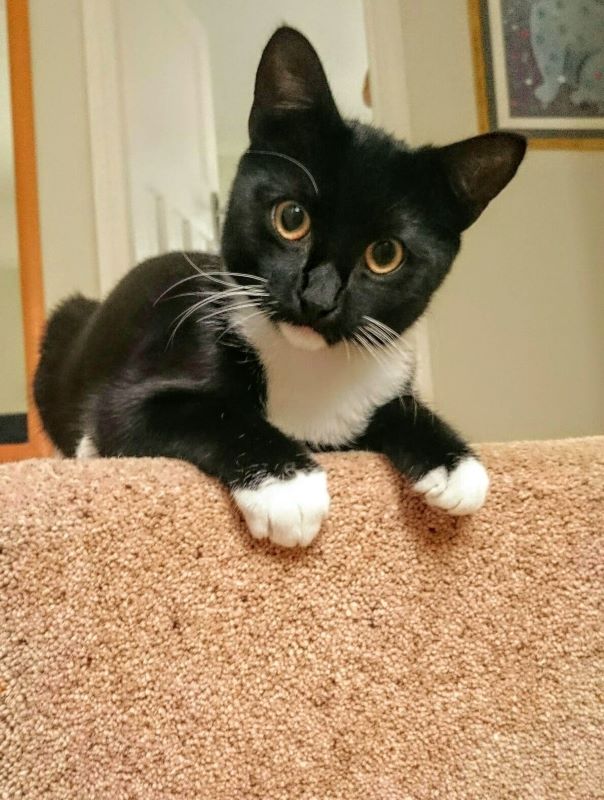
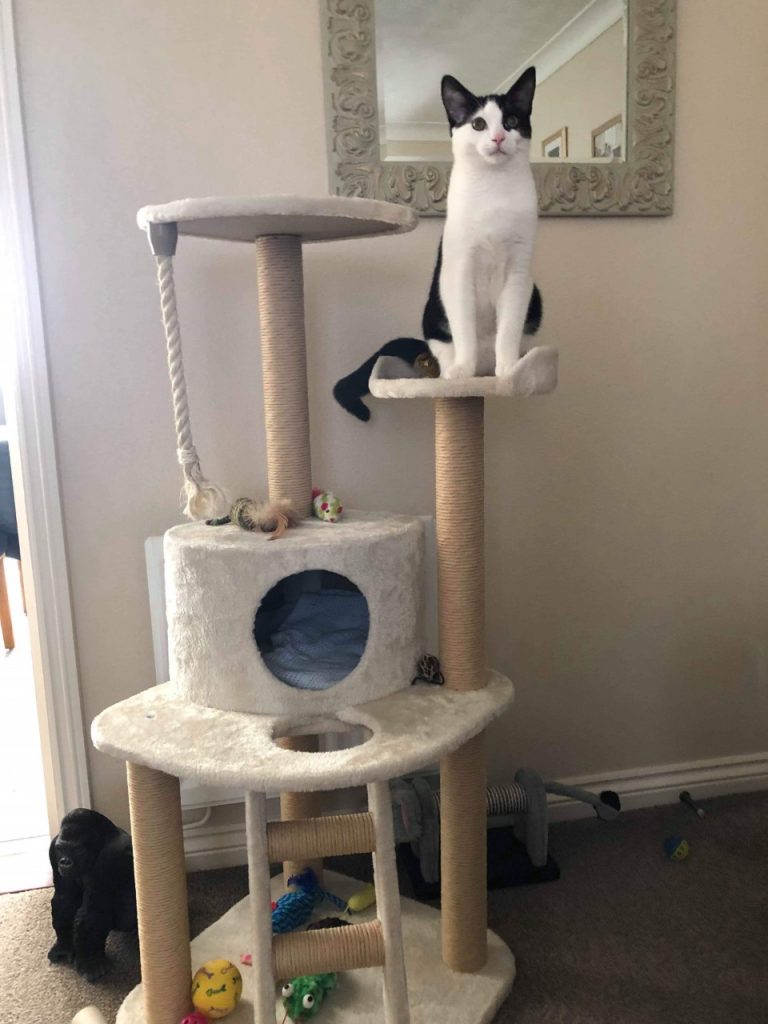
Becky always loved animals! When she was born, her mom and dad already had pets including a little Yorkshire terrier called Jojo that passed away at 18 years old! If you know Becky you know that she loves a small fluffy dog; she owns two beautiful toy poodles, Flash and Poppy, two budgies Dougie and Sammy and finally, a little black and white kitten called Theo!  Flash and Poppy have been in the family for a long time and they make sure to keep Becky busy at times; either by constantly wanting to play or by trying to grab something from the bin that they shouldn’t be!

Sammy and Dougie are two young male budgies that joined the family last year. They love singing and listening to music, as well as eating all day long! Becky has been working really hard on getting them used to being handled; she did an amazing job with positive reinforcement training and they now come to her hand without fear! 

Last but not least is Theo, a hand reared kitten brought in by the police after being found with his brothers and sisters in a horse trailer box. Luckily all kittens made it through and Becky fell in love with Theo. He is now 20 weeks old and has become the mischievous and very spoiled member of the family! Theo loves to play and run around the house, but he is also super affectionate and loves a cuddle.Mayne Veterinary Clinic is a training practice which means that we usually have students, either from Veterinary Nursing or Veterinary Medicine coming to us to learn and perfect their skills. We couldn’t be more proud of Becky and everything she has achieved so far, we are sure she will do fantastically well at her national exams and become an exceptional Registered Veterinary Nurse. 

Oscar turns ONE

Just over a year ago, a little kitten was rejected by his mother and his owner wasn’t in a position to hand rear him, so we stepped in! Our nurse Ricardo and our work experience student Rebecca, took on the job of looking after this little lad. Splitting the week between them, they shared the responsibility of getting up in the night to feed him and cared for him like he was their own baby!

The mother cat had rejected the kitten as, during his birth, his foot had become entangled in the umbilical cord. This stopped some of the blood flow to his foot causing it to die off and become rotten. We initially tried to save the foot, but it soon became clear that it would not recover, so our vet Emma amputated the leg when the kitten was only a few days old.

Since that day, Oscar has never looked back! Cats cope very well with 3 legs and he was now able to move more freely.  He gained weight very well and when he was around 6 weeks old, Rebecca decided to officially adopt him. Although she wouldn’t say Oscar is the best behaved cat, (he can be very naughty!) she can proudly say he is a very handsome one year old and he is living his best life.

What a happy story!

Baking on the Bertha Bus #neverstoplearning

Back in July, our receptionists spent 7 hours during the hottest day on record sat on a bus learning how to improve your client experience.

Whilst the roads melted, train tracks buckled and most people were told to stay at home – definitely no dog walking – our crew stoically sat in Fillpots Garden Centre Car Park to work with Alison Lambert of Onswitch to learn new ways of making our clients (and their pets) visit to the veterinary surgery as pleasant as possible.

In the afternoon the nursing team joined the receptionists, mainly for some ice cream, but also to learn more about the relaunched Pet Health Club with Easy Direct Debit. When the team returned from the bus they were all a little hot and bothered, but it was great to see how enthusiastic they were about the experience and how keen they were to implement fresh ideas to improve our service.

Continued Professional Development is something that Mayne Vets are really keen on encouraging.  It is a requirement that nurses under take 45 hours of CPD in any three-year period and Vets carry out 105 hours to remain on the register. During the last few years, we have had staff travel to America, Birmingham, London and now Colchester to expand their knowledge base. In addition we do a lot of in-house training; dedicating an hour every week to hold a team meeting to discuss any issues we may have had that week and brainstorm ideas to improve the service we provide.

There are always new things to learn and better ways to improve our service and we at Mayne Vets are keen to carry on evolving the service we provide.